
API Docs Update: Filtering, New Endpoints, and Code Examples in Four Languages
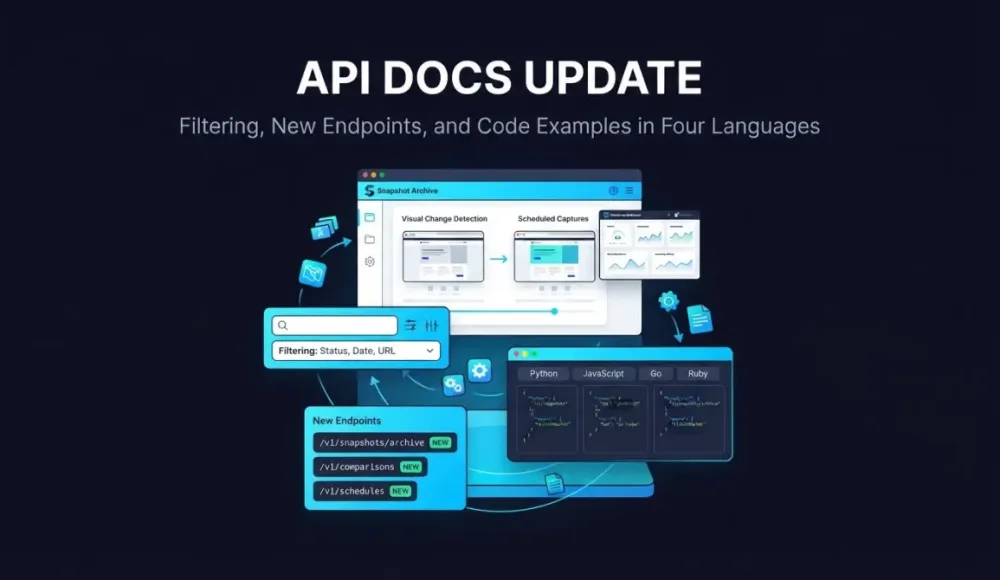
We pushed a batch of API improvements on September 14th. Quick rundown of what changed.
Before this, pulling /v1/snapshots for a busy monitor returned everything in insertion order. If you needed a specific date range, you sorted client-side. That was annoying enough that we kept hearing about it. Now all three main list endpoints — monitors, snapshots, diffs — accept sort and order parameters. Snapshots filter by captured_after, captured_before, and status. Monitor queries support url and name search plus tag-based filtering. Diffs take min_change_percent, max_change_percent, and is_significant, so you can ignore minor rendering noise and only surface captures where the page content actually shifted.
Two new endpoints shipped alongside this. GET /v1/monitors/{id}/latest-snapshot returns the most recent screenshot without paging through the full snapshot list — useful if you're displaying current page state in a dashboard. GET /v1/tags returns your tags with monitor counts attached, handy when querying across a large URL portfolio.
Documentation got a full rewrite at the same time. Every endpoint now has code examples in cURL, PHP, Python, and Node.js, with a tab switcher that remembers your preference across sessions. We added four practical guides covering the patterns we see built most often: retrieving a snapshot from a specific date range, detecting whether a page changed between two timestamps, bulk-downloading screenshots, and wiring up webhook alerts. They're the 20–30 line patterns that cover most integration work, not exhaustive tutorials.
Also worth noting: the full OpenAPI spec is at /api/openapi.json for import into Postman, Insomnia, or any compatible client. And llms.txt is live at the site root, following the llms.txt convention — it lists all endpoints and use cases in the format AI coding assistants can read.
API access is on Starter plans and above. Full reference at snapshotarchive.com/docs.
Start archiving websites today
Free plan includes 3 websites with daily captures. No credit card required.
Create free account
Website Screenshot Retention: How Long to Keep Screenshots and Why It Matters
How long should you keep website screenshots? It depends on your industry, your use case, and the regulations that apply to you. This guide covers retention periods for financial services, healthcare, e-commerce, SaaS, and more — with storage cost estimates and a checklist for building a retention policy.
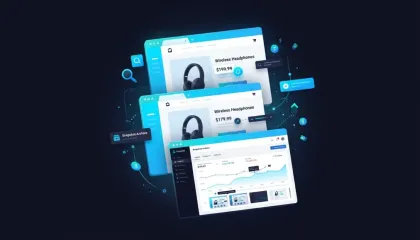
E-commerce price monitoring with screenshots: what we actually found
We set up screenshot-based price monitoring on Amazon across several product categories. Instead of clean price data, we got error pages, layout shifts, and a visual diff that catches things text scrapers miss entirely. Here's the full breakdown with real data.
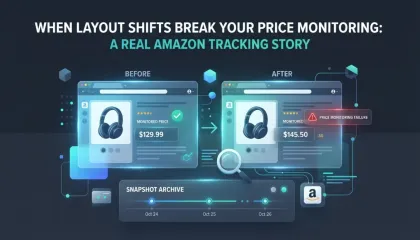
When layout shifts break your price monitoring: a real Amazon tracking story
We set up price monitoring on an Amazon product page and immediately started getting 22% diff alerts — not because the price changed, but because a promotional banner kept appearing and disappearing in the navigation, shifting the entire layout down by a few dozen pixels. Here's how we figured out what was happening and what we'd recommend doing about it.